THE STRESS CONNECTION
What does stress have to do with it?
When most people hear “stress,” they think of a busy schedule or a racing mind. To your body, stress is anything that sets off its alarm system. When that alarm stays on, it affects each one of your Core Four.
HOW YOUR BODY IS DESIGNED
Built for the lion, not for 24/7
Your stress response was designed to save your life. Faced with a lion or a tiger, a surge of cortisol and adrenaline gave our ancestors the energy to run. Once they reached safety, the alarm switched off and the body went back to repair.
Today the “lions” rarely leave. Deadlines, traffic, screens, bills and worry keep the alarm sounding around the clock, and our bodies were never meant to run on high alert day after day.

Two modes, one body
SYMPATHETIC NERVOUS SYSTEM
FIGHT-OR-FLIGHT
Your emergency mode
Heart rate, blood pressure and blood sugar rise so you can react fast. Digestion, repair and reproduction are put on hold until the danger has passed.
PARASYMPATHETIC NERVOUS SYSTEM
REST-AND-DIGEST
Where healing happens
Your body digests and absorbs nutrients, repairs tissue, balances hormones and restores energy. This is the state your body needs to recover.
Stress itself isn’t the problem. Being stuck in fight-or-flight for months or years is, because your body never gets the signal that it’s safe to heal.

CHRONIC STRESS
When the alarm never switches off
Chronic stress comes from many directions, and for most of us, everyday modern life alone is enough to keep the alarm on. For some people, it starts in childhood: adverse childhood experiences (ACEs), such as growing up with conflict, loss, neglect or instability, can teach the nervous system early on that the world isn’t safe. Whatever its source, the body can stay on high alert long after the stress began. Common triggers of chronic stress include:
Over months and years, this constant demand can wear down the very systems that keep us well.
HOW STRESS AFFECTS YOUR CORE FOUR
One alarm, four systems
1 · BRAIN AND NERVOUS SYSTEM
Where it all begins
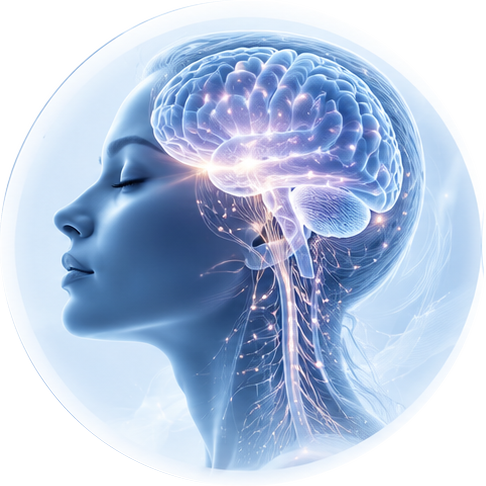
Your stress response starts in the brain.
When your brain senses a threat, the hypothalamus signals the pituitary gland, which tells your adrenal glands to release cortisol and adrenaline. This command chain is called the HPA axis, and it’s how your brain sets the tone for your entire body.
After long periods of stress, the brain can get stuck in a protective “danger” mode, keeping the alarm on long after the original trigger is gone. That’s why brain retraining and nervous system reset exercises are at the heart of our approach: calming the alarm at its source gives every other system the chance to recover.
2 · HORMONES
Stress takes priority
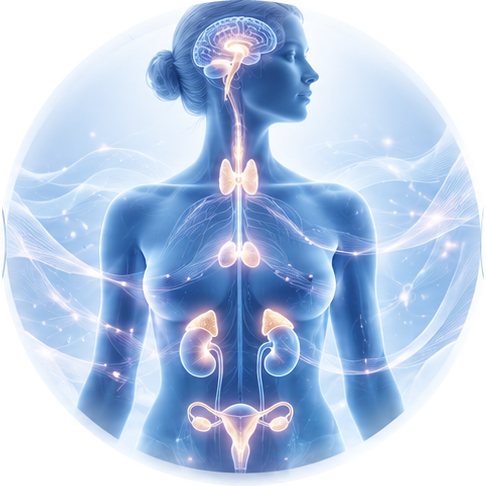
Your body treats survival as more urgent than hormonal balance.
- Cortisol on demand. Ongoing stress keeps cortisol in high demand, and its natural daily rhythm can become disrupted, affecting your energy. Over time, elevated cortisol can contribute to metabolic syndrome (abdominal weight gain, high blood sugar, high blood pressure and abnormal cholesterol) and insomnia.
- DHEA-S can decline. DHEA-S is often called our “rest and repair” hormone. It helps counterbalance cortisol and supports resilience, energy and libido. Under long-term stress, levels can fall, leaving the body in dire need of repair. Chronically low DHEA-S has been linked to depression and general aches and pains.
- Sex hormones are greatly affected. Chronic stress signals the brain to dial down sex hormone production, so estrogen, progesterone and testosterone can be suppressed, which may show up as irregular cycles, worse PMS, infertility, low libido and low energy. For women in perimenopause and menopause, stress adds to hormone shifts that are already under way, so some of the symptoms we blame on this transition may be amplified by a high-cortisol state.
- Thyroid. Stress hormones can slow the conversion of thyroid hormone into its active form, adding to fatigue and a slower metabolism, leading to weight gain.
The Stress & Hormones Profile measures cortisol throughout the day, along with DHEA-S and your sex hormones, so we can see how your body is responding.
3 · IMMUNE SYSTEM
Defenses down, inflammation up
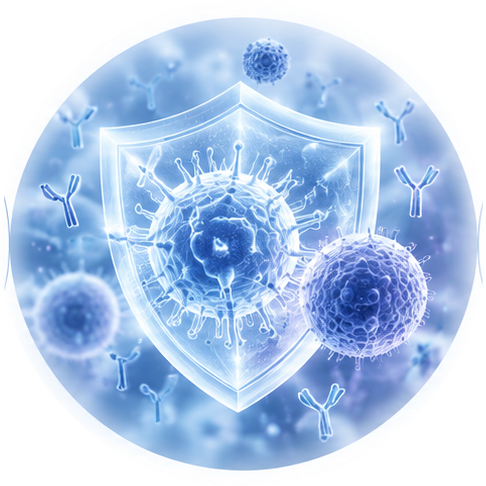
In the short term, cortisol calms inflammation. Over time, the picture changes.
- Getting sick more easily. A stressed immune system can mean catching every cold that goes around, struggling to shake off a cold or the flu, and feeling run down more often. It can also contribute to lingering, chronic illness after an initial infection.
- Weaker front-line defenses. Protective antibodies in the gut lining (secretory IgA) can drop, making it easier for pathogens to settle in and stick around.
- Inflammation that lingers. Immune cells can become less responsive to cortisol’s calming signal, so inflammation stays switched on.
- More histamine. Stress activates mast cells, which release histamine and add to inflammation and sensitivity. Stress is also a well-known trigger for flares of mast cell activation syndrome (MCAS).
- An immune system that turns on the body. When the immune system becomes overactive and dysregulated, it can mistakenly attack the body’s own tissues. Chronic stress has been linked to a higher risk of autoimmune conditions such as Hashimoto’s thyroiditis, Graves’ disease and celiac disease.
- An overworked gut. Much of your immune system lives in the gut. When gut health is poor, it’s constantly busy fighting offending particles, which can leave your overall immune defenses compromised.
4 · GUT HEALTH
A chain reaction
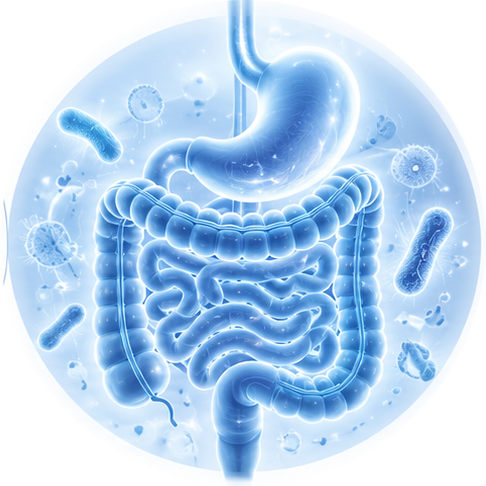
In fight-or-flight, digestion takes a back seat, and each effect builds on the last.
- Less stomach acid and enzymes. Stomach acid (HCl) and pancreatic enzymes can drop.
- Food isn’t fully digested due to the drop in HCl and pancreatic enzymes. Undigested protein can rot in the gut and feed unfriendly microbes, contributing to dysbiosis and conditions like SIBO and IBS.
- Pathogens move in. With less HCl to kill them off and weaker immune defenses, bacteria, yeast and parasites settle in more easily.
- The gut lining opens. The immune response raises histamine and zonulin, which can loosen the tight junctions between gut cells, contributing to gut hyperpermeability (“leaky gut”).
- Food sensitivities develop. Partially digested food particles slip through the gaps in the gut lining. The immune system flags them as dangerous, and reactions to everyday foods can follow.
- The cycle feeds itself. Inflammation and food reactions become new stressors, keeping the alarm on and wrecking gut health and the immune system.
HIDDEN STRESSORS
Stress in disguise
Your stress response reacts to a gut infection much like it reacts to a deadline. These physical stressors, often caused by stress itself, set off the very same alarm:
TYING IT ALL TOGETHER
Your body whispers before it shouts.
Every symptom is your body talking to you. Are you listening?
Not feeling stressed doesn’t mean your body isn’t. The pace of modern life keeps many of us running on cortisol day after day, and most people never even realize it. Feeling tired, foggy, bloated or simply not like yourself can seem minor, but these are often your body’s earliest signals, and over time they can set the stage for more serious disease. The good news: the earlier we listen, the easier it is to restore balance.
Your body and mind are talking all day. We help you listen.

Ever wondered where stress has left its mark on you?
Your Core Four, your brain, hormones, immune system and gut, are deeply connected, so stress affects all of them at once. Functional labs like these can offer insight into all four together:
HORMONES
Stress & hormone panel
Measures your cortisol rhythm, DHEA-S and sex hormones, such as estradiol, progesterone and testosterone, to show how stress is affecting your overall hormone balance. Learn more
GUT
GI-MAP
Looks at the health of your microbiome, including signs of dysbiosis, and checks for pathogens such as H. pylori, Candida and other unfriendly bacteria and parasites. Learn more
FOOD
Food sensitivity testing
The Mediator Release Test (MRT) shows which foods may be triggering your immune system, so you know what to avoid while your gut heals. Learn more
OUR APPROACH
Easing stress is where we begin.
Helping your body heal is at the heart of what we do.
Here’s how we take you from running on stress back to balance:
Calm the alarm
Brain retraining and a nervous system reset with Primal Trust, plus calming mind-body techniques in our coaching sessions, with an emphasis on emotional wellness.
Find the hidden stressors
Your lab results show what’s keeping your alarm switched on, so we can support you exactly where you need it.
Rebuild
Your personalized R.I.S.E. protocol supports gut healing, healthy immune function, hormone balance and energy, laying the foundation for lasting health and longevity.
Ready to rise?
Wherever you're starting from, it begins with a brief health questionnaire and a free 30-minute discovery call. We'll talk about where you are, where you want to be, and how BlüMethod can help you get there.
Book your free call